The right end cap seals out debris, removes sharp cut edges, and gives your tube, extrusion, and T-slot framing a professional finished look. This is the practical guide to the types, materials, and finishes — plus a fast way to get exactly the caps you need.
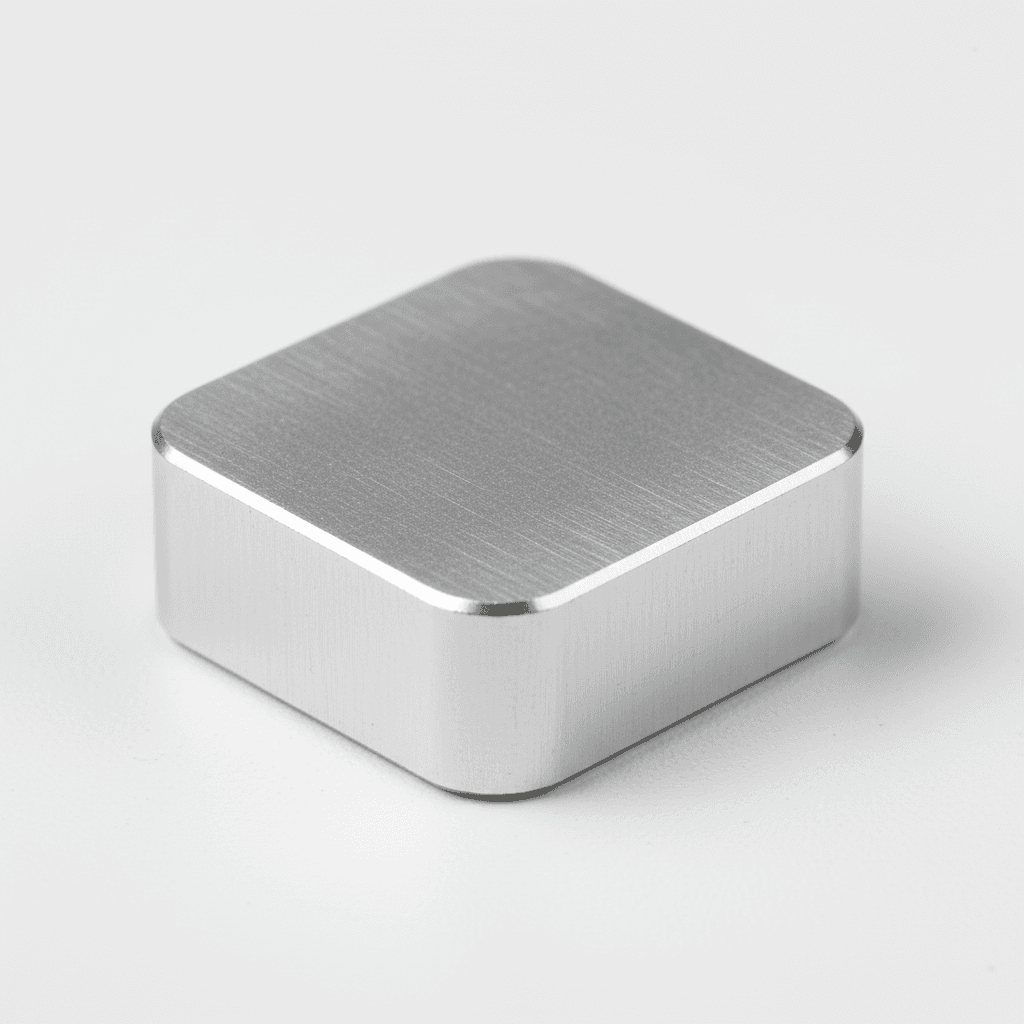
An aluminum end cap is a machined or extruded fitting that closes the open end of a tube, extrusion, or T-slot profile. It press-fits or threads into the opening and does three jobs at once: it keeps out dust, moisture, and debris; it covers the sharp cut edge left by sawing; and it gives the part a clean, finished, professional appearance.
Unlike plastic, aluminum caps do not become brittle, discolor in sunlight, or lose their look over time. They match the extrusion or tube they cap, resist corrosion, and can be anodized or powder coated — so an entire railing, guard, or frame can be finished as one continuous piece with no color break.
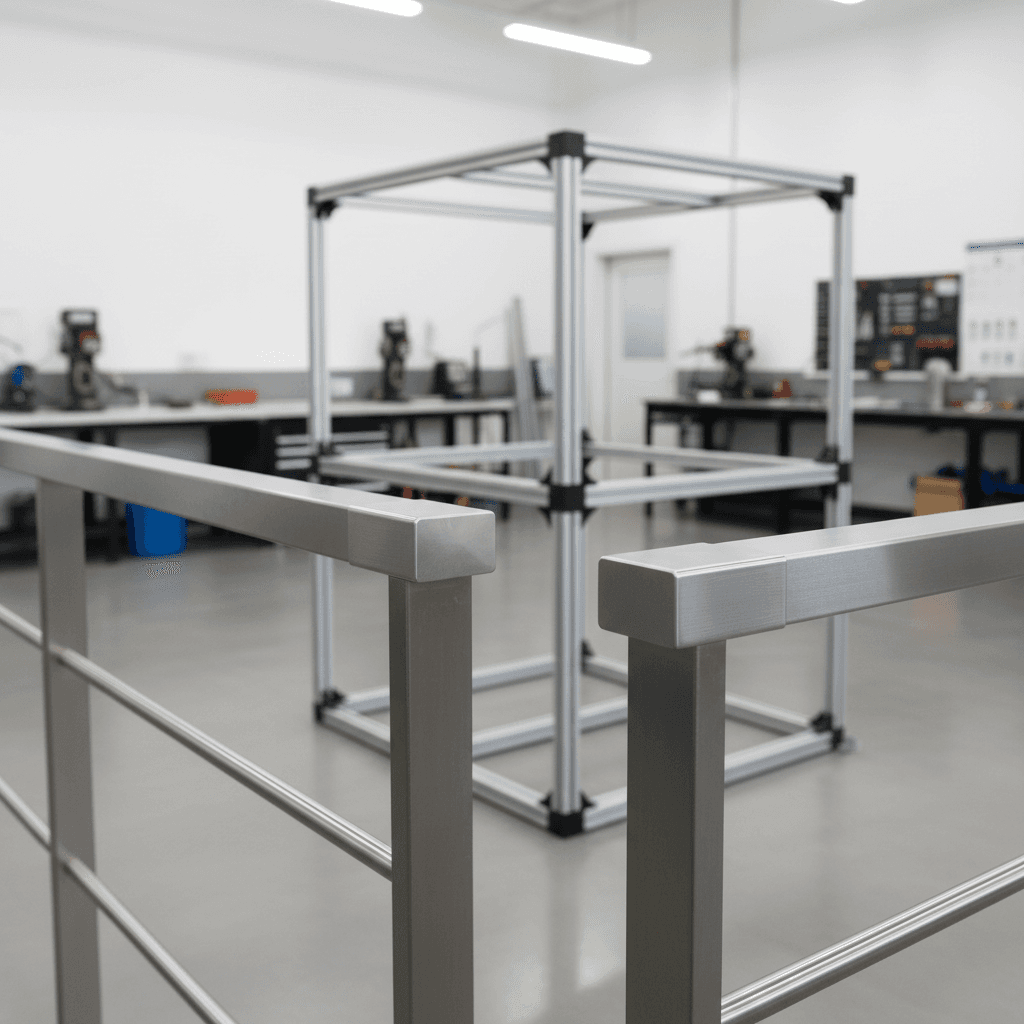
They show up everywhere structural aluminum does: 80/20-style T-slot framing, machine guarding, workstations, railings and balustrades, solar mounting, enclosures, displays, and furniture.
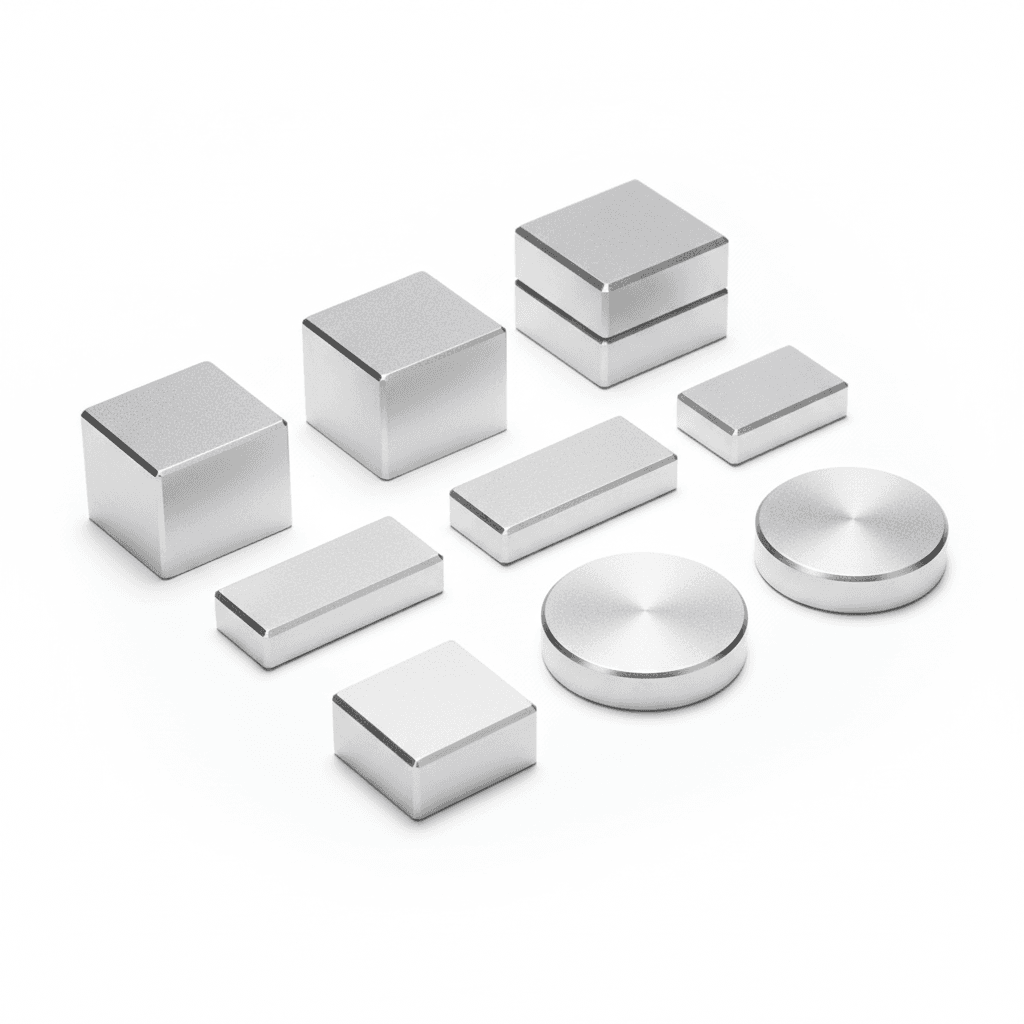
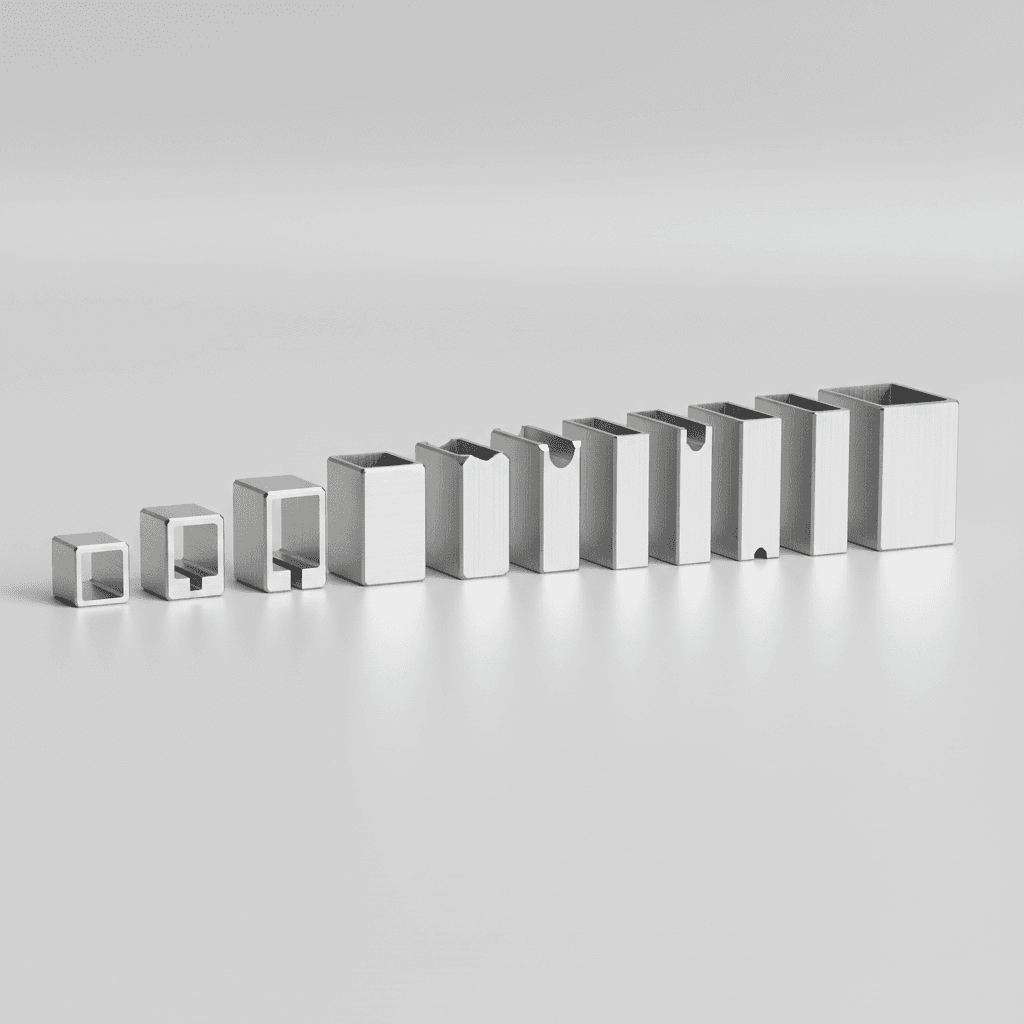
Caps are grouped two ways: by the shape they close (square, round, or a specific extrusion profile) and by how they attach (press-fit or threaded). Here are the forms you'll actually spec.
Seat over (OD) or inside (ID) square and rectangular tube for a clean, safe finished edge. The workhorse cap for railings, furniture frames, and fabricated structures.
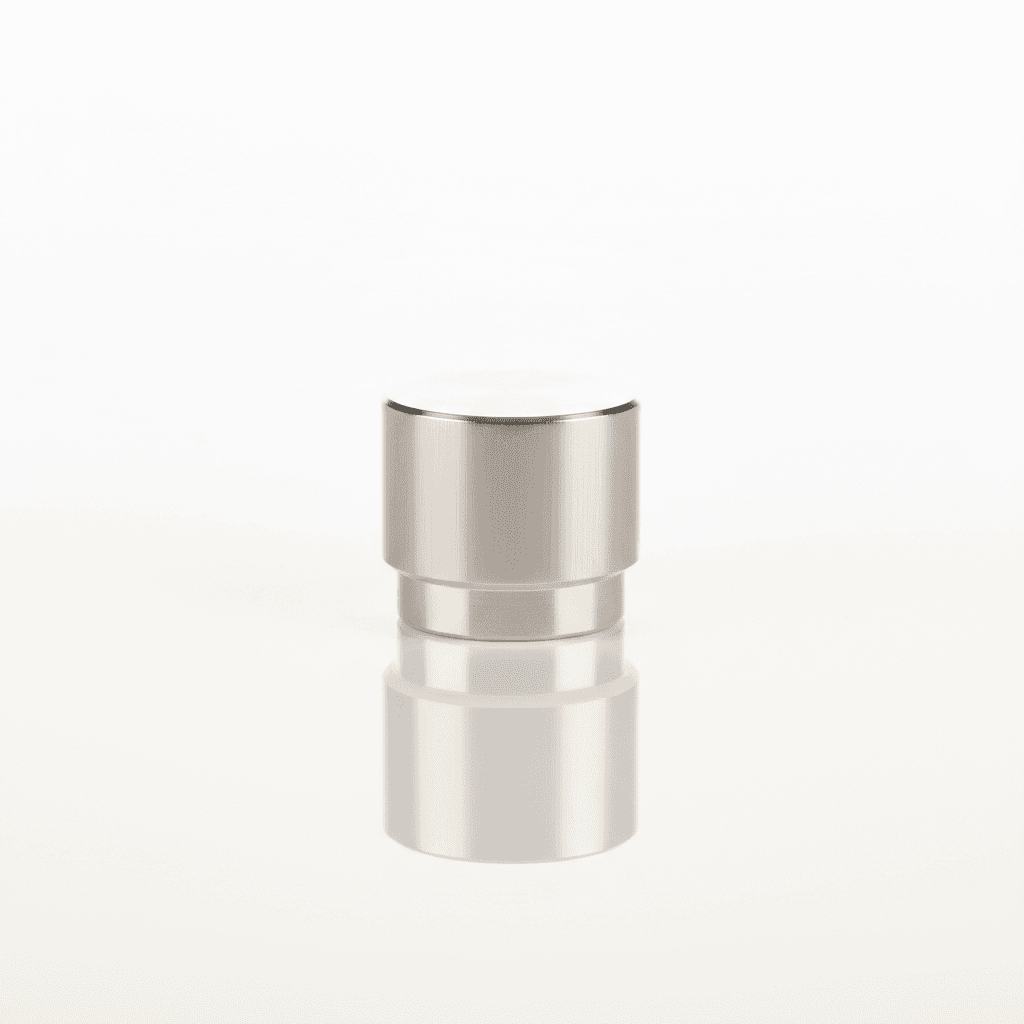
Sized by diameter and wall to plug round tube and pipe ends. Keep out debris on posts, handrails, and roll-formed frames while removing the sharp cut edge.
Profile-specific covers for extrusion framing — 20 series (20x20, 20x40) and 40 series (40x40, 40x80) and beyond. They register on the slots so the cap sits flush and true.
The most common attachment: an interference fit tapped home with a rubber mallet. No welding, no adhesive, no fasteners — fast on the line and clean to the eye.
Add a stud, boss, or screw so the cap is removable and serviceable. The right choice when you need periodic access to the inside of the profile or tube.
Non-standard profiles, drainage slots, mounting features, or matched-finish caps for glazing, balustrade, and signage systems where appearance is part of the spec.

End caps come in three material families. The right one depends on load, environment, and how much the finish matters.
Strongest and most durable. Won't go brittle or fade in UV. Takes anodizing and powder coat, so the whole assembly can match. The choice for railings, guarding, and architectural work.
Inexpensive and rigid, snapping snugly onto tube for a stable seal. Common in plumbing, automotive, and electronics, and for masking parts during finishing.
Elastic, so it conforms to slightly varying diameters for a tight grip. Favored in medical and food uses and anywhere a compliant, protective seal is needed.

Anywhere a cut aluminum tube or profile is exposed, an end cap makes it safe, sealed, and finished.
Workstations, carts, 80/20-style machine frames
Safety enclosures and perimeter guards
Handrails, posts, gates, fencing
Rack ends and structural extrusion
Electrical and equipment housings
Frames, shelving, trade-show builds
Curtain wall, signage, façade trim
Any sawn tube needing a finished edge
Four decisions get you to the correct part. Get the first two exactly right and the cap will seat snug and rattle-free.
Decide whether the cap goes over the outside (OD) of the tube, plugs inside (ID), or registers on a specific extrusion profile. For T-slot, identify the series and size (e.g. 40x40).
Measure width and height (or diameter) and the wall thickness. Wall thickness changes the internal opening, which is what an ID plug actually grips.
Press-fit for a permanent, tool-light install with a rubber mallet; threaded or screw-mount when the cap must be removable for service access.
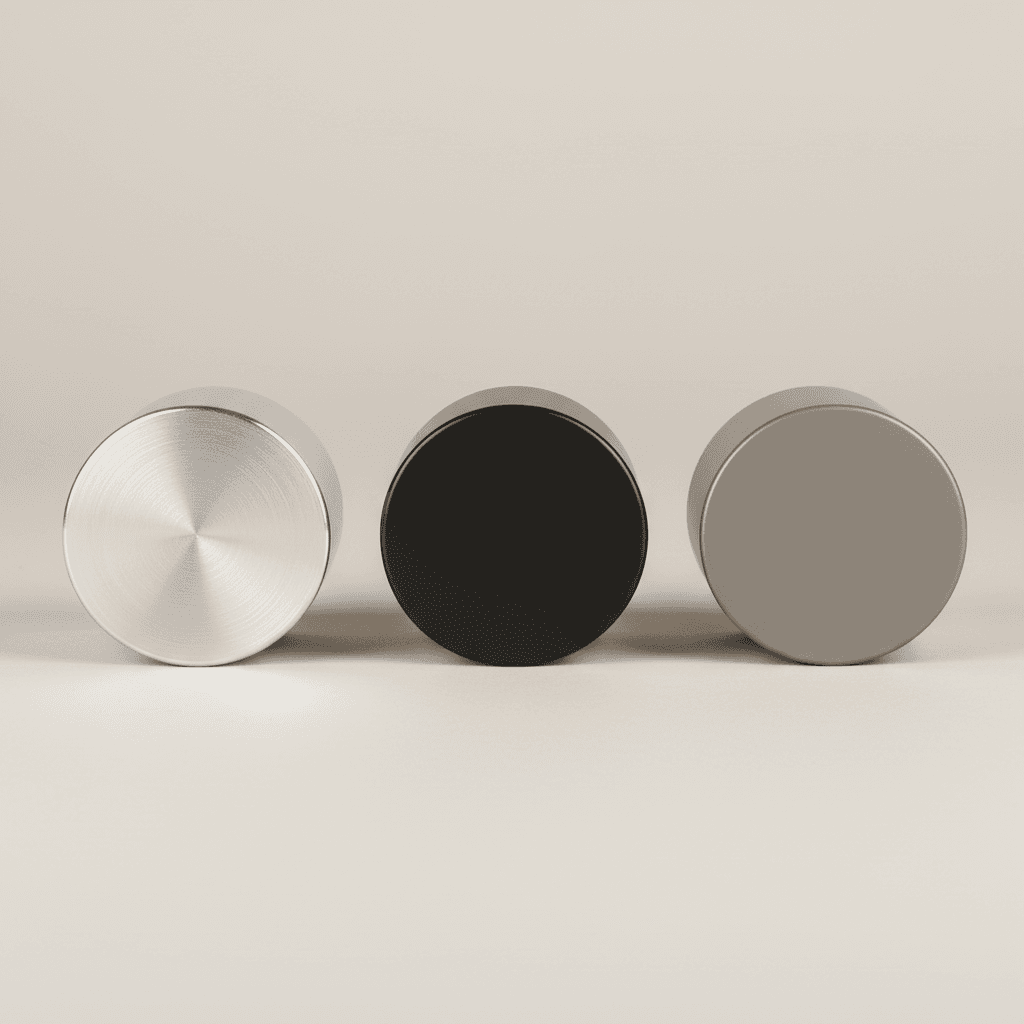
Mill for raw, anodized for a hard corrosion-resistant layer, or powder coat for color. You can pre-finish caps or coat the whole assembly for a seamless match.

Aluminum end caps close off the open end of a tube, extrusion, or T-slot profile. They keep out dust, moisture, and debris, remove sharp cut edges for safety, and give a finished, professional look to railings, machine guarding, framing, furniture, enclosures, and architectural work.
A tube end cap fits standard square, rectangular, or round tube by outside or inside dimension. An extrusion profile end cap is shaped to match a specific structural profile — most commonly T-slot framing such as 20 series (20x20, 20x40) and 40 series (40x40, 40x80) — so it seats flush over the slots and web of that exact profile.
Plastic caps are the low-cost choice for indoor, light-duty finishing and masking. Rubber caps flex to grip slightly irregular or varying diameters and are common in medical and food uses. Aluminum caps are the choice when you need strength, a premium matching finish, UV and corrosion resistance outdoors, or the ability to powder coat the whole assembly as one piece.
Most are press-fit: sized for a tight interference fit and seated with a soft-faced (rubber) mallet, needing no welding or adhesive. Some designs add friction ribs, a snap detent, or a threaded stud/screw boss for a removable, serviceable cap. Choose threaded or screw-mount when the cap must come off for access.
For tube, measure whether the cap goes over the outside (OD) or inside (ID), then the width and height (or diameter) and the wall thickness. For extrusion, identify the profile series and dimension (for example 40x40 T-slot). Getting OD-vs-ID and the exact profile right is what determines a snug, rattle-free fit.
Common finishes are mill (raw as-machined), clear or colored anodized (a hard, corrosion-resistant oxide layer), and powder coat. Because aluminum caps take powder coat and anodizing, you can pre-finish them or install raw caps and coat the finished assembly so the whole piece matches with no color break.
Yes. Aluminum resists corrosion, will not become brittle or discolor in UV the way many plastics do, and holds a premium finish over time. That makes aluminum caps well suited to fencing, balustrades, gates, railings, solar mounting, signage, and other outdoor architectural applications.
End caps are commonly machined or extruded from 6000-series aluminum such as 6060, 6063, or 6061 (often in a T5 temper). These alloys are lightweight, strong, corrosion resistant, and finish well by anodizing or powder coating — the same alloy families used for the profiles the caps fit.
Tell us the profile or tube size, the quantity, and the finish you're after. We'll come back with the right cap and pricing. Whether it's a single T-slot series or a full architectural run, send the specs and we'll handle the rest.

Tell us the profile, tube size, and quantity you need. We'll get back to you with options and pricing.